TL;DR
- Five hand-picked roles this week, from a first corp dev hire reporting to a CEO to a US$333K deal lead at OpenAI.
- BMO and RBC sold Moneris to Francisco Partners for C$2.0 billion. The more useful question is who else could have bought it.
- Anthropic's June 9 retention policy overrode zero-retention contracts. On August 19, OpenAI shipped a preview built to avoid the same trade-off.
All content is written by me, with research pulled from online sources and AI. Sources are listed where possible. Some sections include photos and graphs generated to complement the articles.
This Week's Roles
This week's hand-picked roles across Corporate Development, Corporate Strategy, and Buyside M&A:
Corporate Development, Deal Lead
OpenAI
Sits inside the Finance org and owns high-priority M&A and strategic transactions end to end, from early evaluation through diligence, structuring, and negotiation. Rare chance to do deals at the company setting the pace of the entire AI buildout.
Senior Manager, Corporate Development & Strategy (M&A)
Kensington Tours
Reports to the VP, Strategy at Range Group, the Toronto platform rolling up luxury travel across Kensington Tours, Travel Edge, TripArc, and Ensemble. Acquisition and investment evaluation, commercial diligence, and Board-level investment cases, with 2+ years post-MBA or 5+ post-undergrad the stated bar.
Director, Corporate Strategy
Commvault
Reports directly to the CFO of a NASDAQ-listed cyber resilience company, owning the multi-year corporate strategy and the Board materials behind it. A pure strategy seat with real proximity to where the capital gets pointed.
Corporate Development Associate
Highmark Health
Joins the Corporate Development and Strategic Investments team at an integrated payer-provider, working JVs, acquisitions, divestitures, and venture investments across a portfolio spanning health insurance and care delivery. Good analyst-to-associate step for someone coming out of banking with 3+ years.
Corporate Development Lead
MGT Insurance
First dedicated corp dev hire at an AI-native commercial P&C insurer, reporting directly to the CEO and working closely with the Co-CEOs. You source the pipeline, manage the bankers, and negotiate directly with counterparty CEOs and General Counsel, building the function from nothing.
Moneris Heads South of The Border
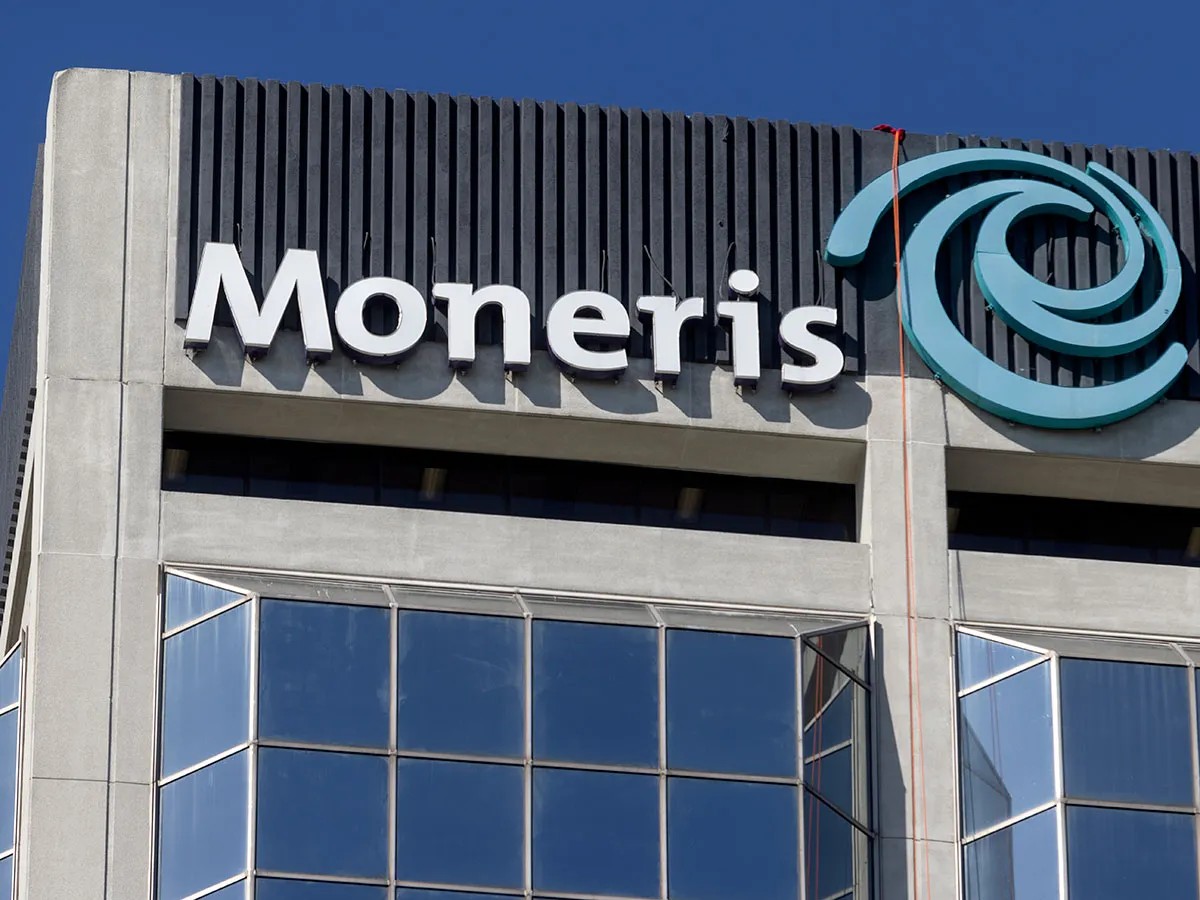
On August 10, BMO and RBC agreed to sell Moneris to Francisco Partners for approximately C$2.0 billion in cash. The company handles one in three Canadian transactions across more than 325,000 points of commerce and employs about 2,000 people. RBC books an after-tax gain of roughly C$475 million, BMO roughly C$600 million.
Most of the commentary has been about sovereignty. The more useful question, if you run deal processes for a living, is narrower: who else could have bought it?
Start with the banks. Merchant acquiring - the business of onboarding merchants and processing and settling their card payments - is a business Canadian banks have been steadily moving away from for 25 years. They were never real candidates, and not because they lacked capital. CIBC sold its merchant acquiring business to Global Payments in 2001. National Bank sold its merchant services business to Global Payments the same year. Scotiabank sold its acquiring portfolio to Chase Paymentech in 2002. TD agreed in July 2025 to move roughly 3,400 merchant relationships across 30,000 locations to Fiserv. The direction of travel across the Canadian banks has been remarkably consistent: keep the commercial relationship, outsource or sell much of the acquiring and processing infrastructure. And this most recent deal has another structural element: Moneris' forward value rests on exclusive long-term referral arrangements with BMO and RBC. Neither bank funnels its commercial clients into a rival bank's subsidiary.
Then the payments platform of scale. Nuvei is the obvious Canadian name, but the timing made a bid difficult. Advent led its 2024 take-private, although Fayer, Novacap and CDPQ still collectively owned or controlled 54% of the company at the time of the take-private. More importantly, Nuvei had just committed US$2.75 billion to acquire Payoneer, with closing expected in mid-2027. Its capital and management attention were already pointed at a major cross-border payments transaction.
Then the commerce platforms. Lightspeed is a difficult fit on size alone. Its market cap was roughly US$1.3 billion in August, meaning a C$2.0 billion Moneris acquisition would have been larger than Lightspeed's entire equity value and profoundly transformational. Its board concluded in February 2025 that the best path was a transformation as an independent public company. Shopify has the balance sheet several times over, but not the appetite. Shopify still relies on Stripe for core payment processing infrastructure.
That leaves the capital pools. CDPQ, Novacap, Onex, and the pension funds could write the cheque, and Nuvei proves they will fund payments assets. What none of them has is an operating platform to fold Moneris into. Francisco Partners already owns Verifone and holds a stake in Paysafe. That gave it payments-specific operating context on top of the financial case, an underwriting advantage a generalist financial buyer would not necessarily have.
Canada is not short of capital, but it is short of platforms large enough for an asset like Moneris to land on. When a Canadian business reaches this scale and a sale is the outcome, the exit has routed to a US sponsor in both recent cases, and control can move with it.
Sources: BMO Newsroom (Aug 2026); RBC Newsroom (Aug 2026); PYMNTS (Aug 2026); Global Payments press release (Mar 2001); Global Payments SEC 8-K (Sep 2001); Bank of Canada staff discussion paper (Jun 2020); TD Newsroom (Jul 2025); Financial Times (May 2026); Advent International (Apr 2024); Nuvei SEC 6-K (Nov 2024); Nuvei (Jun 2026); Lightspeed (Feb 2025); Macrotrends (Aug 2026); Francisco Partners (Aug 2026)
Private Safety Processing
Microsoft restricted internal use of Claude Fable 5 and sent the terms back to its legal team. Startup founders and software executives began shifting workloads to cheaper models. The Wall Street Journal reported a backlash building across Silicon Valley.
Anthropic was already facing a broader backlash over competitive tactics and model restrictions. The retention policy added an enterprise problem of a different kind. On June 9, alongside the Fable and Mythos launches, Anthropic began requiring that prompts and outputs to designated covered models be retained for 30 days (and in cases where Anthropic's automated safety systems flagged the content, longer), on every platform where those models are offered.
The policy changed nothing for consumer plans, where data was already retained. It applied specifically to organizations running zero data retention (ZDR) workspaces, meaning the customers who had contracted for the opposite. That is particularly difficult for finance and healthcare buyers, where retention of sensitive prompts and outputs can become a procurement or compliance blocker. Azure Foundry customers with ZDR configured now need a separate Azure Subscription to reach covered models at all.
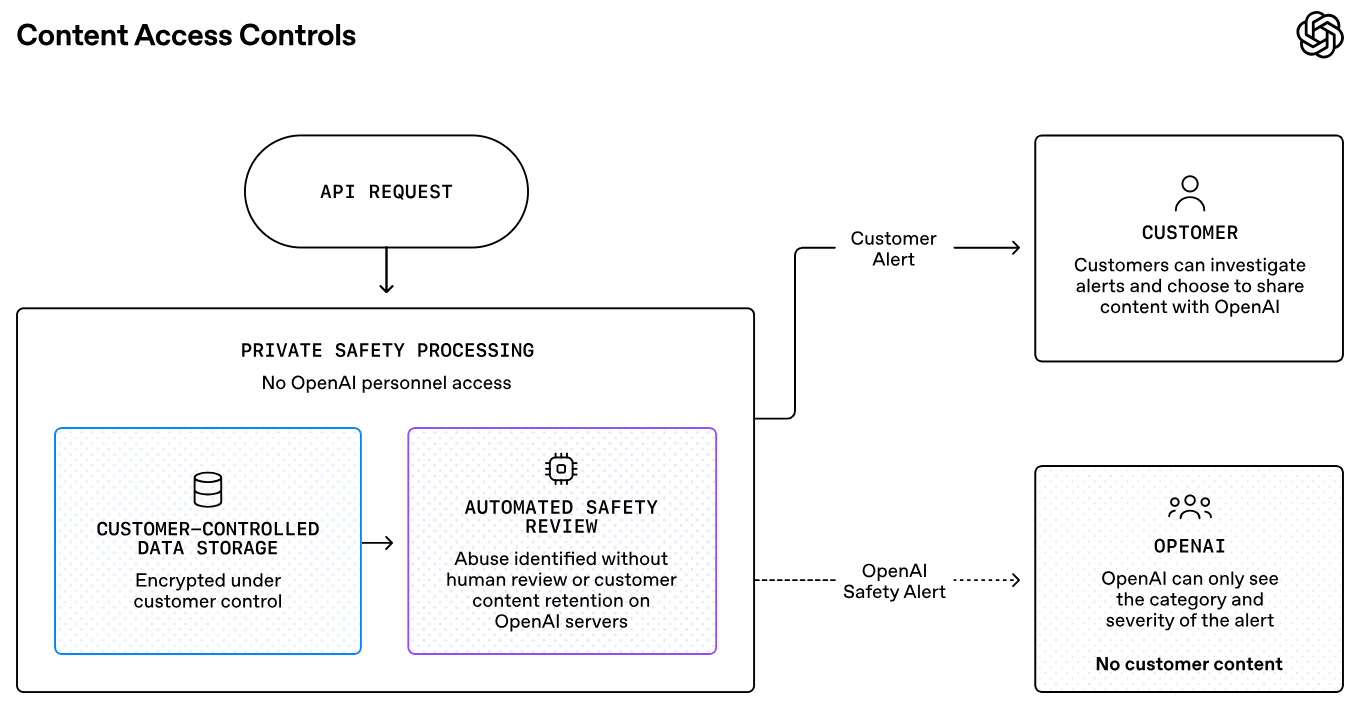
On August 19, OpenAI previewed Private Safety Processing, which keeps ZDR intact and relocates the pattern detection. Content stays on customer-controlled infrastructure, or on OpenAI infrastructure encrypted with keys the customer holds and OpenAI does not. When automated systems flag something, OpenAI receives a signal indicating activity type and severity, not the underlying content. The customer investigates in its own systems and decides whether to share more. Testing is underway with early customers; rollout and a technical white paper are planned for September. Microsoft is listed as a named customer on the announcement page.
Both labs describe the same limitation, that serious risk is often invisible in a single prompt-response pair. They have shipped different architectures in response. For OpenAI, the decision feels timely, as public perception is largely mounted on the pillars of data sovereignty and protection. It's no secret that using AI poses risks, and those risks only grow as models become more capable, and bad actors become more proficient at using them.
OpenAI named Glean, Databricks, Abridge, and Microsoft as customers shaping Private Safety Processing before it shipped. Whatever else that list is, it is a disclosure that the privacy architecture of frontier models is now being co-designed with large buyers rather than announced to them.
Sources: The Verge (Jun 2026); Reuters (Jun 2026); Anthropic Help Center (Jun 2026); WSJ (Aug 2026); Axios (Aug 2026); OpenAI (Aug 2026); Bloomberg (Aug 2026)
Thank You
Thanks for the support — it means a lot. Consider sharing with your network, or providing feedback here: corpdevcareers.com/contact
— Liam