TL;DR
- Job Roundup: Five hand-picked roles, led by Anthropic’s life sciences corp dev seat at up to US$425K base.
- AI & DealTech: Claude now watermarks its text. Who can check it, what a match proves, and what it doesn’t.
- Market Pulse: Jensen Huang is out at Nvidia. How each deal’s structure decides its exposure, from Hugging Face to Marvell/Lumentum.
All content is written by me, with research pulled from online sources and AI. Sources are listed where possible. Some sections include photos and graphs generated to complement the articles.
This Week's Roles
This week's hand-picked roles across Corporate Development, Corporate Strategy, and Buyside M&A:
Corporate Development Lead, Life Sciences
Anthropic
Owns Anthropic’s deal strategy in life sciences, from acquihires and tuck-ins to minority stakes and partnerships across AI drug discovery, clinical development and healthcare data. Built for someone with 8-12 years of experience, 5+ of them in biotech or healthtech, who already knows the founders and VCs.
Director of Corporate Development
Jensen Hughes
A global safety engineering firm with acquisitions at the core of its growth plan. This seat is the main analytical partner to the Chief Development Officer, owning valuation, acquisition economics, the deal pipeline and board-ready materials. A strong fit for bankers or PE-backed corp dev people who model and write slides well.
Senior Manager, Corporate Development and Strategy
Playfly Sports
A small strategy team at a sports media and marketing company that grows by buying and consolidating smaller businesses. You’d work with senior executives from sourcing to close, owning models, diligence, integration planning and board materials. A good fit for someone who wants deal reps in sports and media.
Corporate Development Manager
Fidelity Canada
Sits on the Strategy & Corporate Development team, reporting to the Director, Corporate Development. The work splits between strategy consulting for Fidelity Canada’s senior leaders and sourcing, diligence and execution on Canadian M&A, divestments and JVs. Asset and wealth management experience is a plus.
Manager, Strategy & Operations - New Initiatives
Enova
A build-or-buy seat at the fintech lender. The work runs from market studies and business models for new product lines to managing acquisitions and start-ups through integration. A good bridge for consultants or strategy generalists who want real deal exposure.
Claude Now Watermarks Its Text. Here’s Who Can Check.
For most of us, AI-generated text has become so commonplace in the content we consume that we are often stuck wondering whether the text we read was written by a person, or by a machine. Certain words, patterns of speech, and symbols (the em-dash) have given rise to high levels of scrutiny towards all content, regardless of source.
Anthropic is now embedding coded “watermarks” in Claude-generated text and giving certain organizations and institutions access to a service that checks for them.
How It Works
When Claude writes, it picks the next word based on a distribution of possibilities, often choosing one of several options. For example: “Corp Dev hiring picked up at a [steady/solid/healthy] pace this quarter”. All three of those words could fit the sentence, and historically, Claude would randomly pick one of the three. Watermarking replaces the usual random choice with a secret key and the preceding words, so the chosen words follow a pattern throughout the text that only the key holder can check for. In a typical body of text, there are numerous opportunities for word choices, so the longer the text, the more confident the check.
That’s why copy-pasting does nothing to obscure the source of AI content. Unlike with an image, where the watermark can be a literal visual mark on the composition, these text-based codes are not superficial: they are made up of the words themselves. Even if you sat and re-typed the text yourself word-for-word, the watermark would survive.
This also means that checking a passage is an exercise of statistical analysis, not a true lookup. A keyholder can run a calculation over your passage and see how often the key would have made the same decisions. If it’s far above random chance, the text is flagged.
Who Can Check It
Text-checking is centralized at Anthropic, but access to the tool has been given to eligible organizations, including educators, regulators, law enforcement, media, etc. These groups are able to send text to Anthropic, where the check is run with the key, and then sent back as a score. The reason it’s so tightly controlled is because if a bad actor were to get ahold of the key, they could reverse engineer any body of text to erase the signs of AI composition.
What It Can Tell You (and Can’t)
- It gives a probability that Claude was involved. Longer passages give more confidence, as the chances that a human would have picked words in that exact sequence drop toward zero.
- A negative result doesn’t prove that it was written by a human. The text could also have been generated from another company’s model, an older Claude model not using the watermark yet, or could have been heavily edited to the point where the words no longer align with the key.
- It works poorly on factual passages and code where there are few substitutable words.
Rather than being a one-stop-shop for AI testing, I see this as a step towards a semi-controlled ecosystem. Claude is one of many LLMs that people use to create text, so this will make up one tool in an arsenal of strategies and systems designed to flag AI-produced text. The thing is, I honestly can’t tell if this will make any difference. For better or for worse, educational institutions have been forced to rapidly adapt alongside AI proliferation, with many now adopting the position that students ought to be judged based on their abilities alongside AI, rather than explicitly excluding it.
I can also see opportunities for people to get around this system, at a basic level by simply heavily editing Claude-generated text, and at a more involved level by developing tools to re-randomize text variants within a larger body of writing.
The EU AI Act and Scope
The main reason for all of this is the EU AI Act, the European Union’s main law regulating artificial intelligence. It came into force in August 2024, and has rolled out in stages. These watermarking obligations took effect on August 2, 2026, but some of the earlier models have until December 2, 2026 to be updated with the watermarking. Anthropic made the decision to apply the watermark to all customers, not just those in the European Union, in part because the watermark is built into the model itself and not the user’s account. It is interesting to note that this was a choice, not a requirement. OpenAI’s equivalent solution, textGrain, launched in October and is applied automatically to ChatGPT and Codex text, but only in the EU. API customers anywhere can switch it on, but it’s off by default.
OpenAI had the technology by 2024 but held it back. A survey found almost 30% of ChatGPT users saying they would use the service less if watermarking was implemented.
Why This Matters for M&A Professionals
For professionals regularly using AI to draft investment memos, diligence summaries, and board presentations, the more interesting question may not be whether AI involvement can be detected, but what that detection actually tells us.
A watermark can’t distinguish between an analyst who used Claude to polish a carefully researched investment memo and one who asked it to generate the entire document. Nor does it say anything about the accuracy of the analysis, the reliability of its sources, or the judgment behind its conclusions.
As these detection systems become more widely available, companies will have to decide what they actually want to measure: the involvement of AI in producing a document, or the quality and originality of the thinking behind it.
Sources: Anthropic (Aug 2026); Anthropic Help Center (Aug 2026); European Commission, AI Act Service Desk (Nov 2026); OpenAI (Oct 2026); BleepingComputer (Oct 2026); The Wall Street Journal (Aug 2024)
Editor's Note
Consider the use case in hiring and recruiting. Many companies are already using AI to screen resumes and candidates, if access widens, they could now use this service as part of a larger system to screen out any resumes not written by a human (for the time being, as I mentioned earlier, this service on its own can only detect Claude’s watermark).
But again: should it matter? A candidate who uses AI to improve the wording of their resume isn’t necessarily less qualified than someone who writes it all themselves. And since detection currently doesn’t cover all models, employers would risk deploying an inconsistent standard.
Nvidia’s Leadership Crisis Reaches the Deal Table
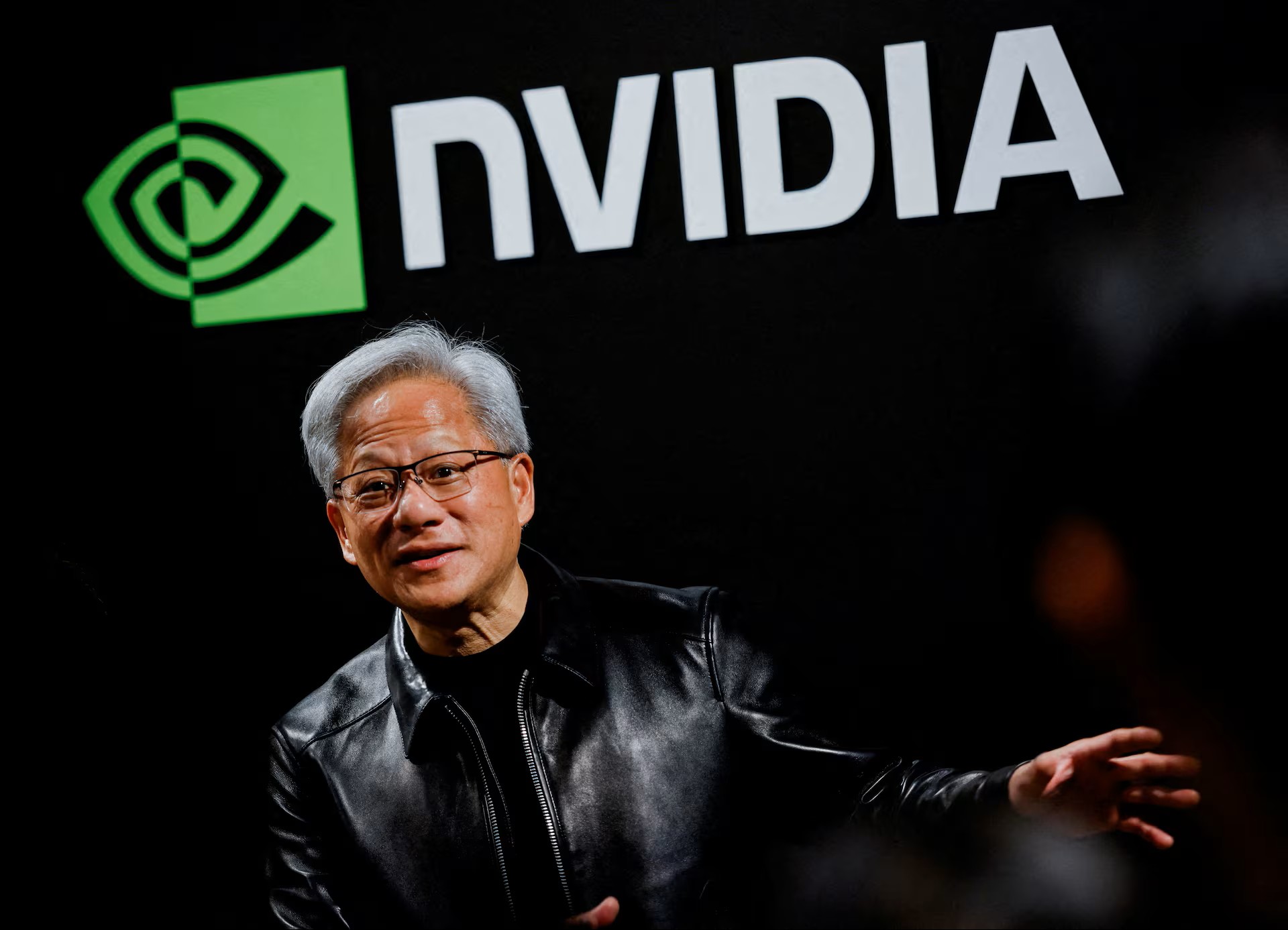
In just two weeks, Nvidia has gone from an AI market darling to the centre of a leadership crisis. Nvidia Founder and CEO Jensen Huang has been accused of not one, but two affairs - one with a suspected Chinese spy. The financial world has been abuzz ever since, and Nvidia’s stock price has dropped by around 24% since rumours started circulating in late October. Here’s a timeline of the events since:
- October 29: The New York Times first reports on Huang’s close relationship with Alice Huang and U.S. espionage concerns.
- Sunday, November 8: Jensen Huang sent an email to Nvidia employees, admitting to having an extra-marital affair and apologizing. Nvidia’s board initiates an independent investigation on the reported story that Huang has been the target of a foreign intelligence effort.
- Wednesday, November 11: The New York Times reports a second relationship with an internal Nvidia executive, Kimberly Powell, leading to another board discussion.
- Thursday, November 12: Huang resigns as president, CEO and board member, effective immediately. CFO Colette Kress becomes interim CEO and keeps the CFO role while the board searches for a permanent successor. Harvey C. Jones, formerly of Synopsys, becomes Nvidia’s first board chair and will direct the search.
Nvidia’s stock price has fallen steeply, with its overall market value falling below $4 trillion for the first time since 2025. So what does this mean for the deals Nvidia already has on the table?
Nvidia doesn’t just make chips; it’s one of the most active strategic investors in tech. From January to August 2026, it took part in 53 venture rounds of $100 million or more, ahead of Andreessen Horowitz with 44, and Sequoia with 42. Two pending transactions show how differently a CEO exit hits a deal, depending on how the deal is paid for.
Hugging Face ($12.9 billion): Insulated on Price, Exposed on Execution
Nvidia is paying approximately $11.9 billion in cash to Hugging Face stockholders, plus up to $1.0 billion in equity-based retention awards for employees. The cash consideration is unaffected by Nvidia’s falling share price, although the value of its equity-based retention awards is not. The bigger concern is execution. Hugging Face reportedly rejected a $500 million Nvidia investment at a $7 billion valuation in late 2025, wary of bringing in a dominant investor. Months later, Delangue says, he approached Huang himself, having concluded that open-source AI needed more resources and scale. Now, the executive who helped bring the deal together is leaving, raising questions about integration and whether Nvidia’s new leadership will honour the commitments made during negotiations. The DOJ is also examining the acquisition’s implications for competition in AI.
Marvell/Lumentum ($115 billion implied enterprise value): Indirect Exposure Through Nvidia’s Ecosystem
Unlike Hugging Face, this isn’t an Nvidia acquisition. Marvell is buying Lumentum in an all-stock, fixed-ratio deal, but Nvidia put $2 billion into each company earlier this year, and Marvell’s CEO called the combination “a double down on supporting Nvidia.” Both CEOs reportedly called Huang for his blessing before announcing. Lumentum shareholders receive 4.5 Marvell shares per Lumentum share, so the consideration moves with Marvell’s stock. The headline $1,132 per share was calculated using Marvell’s unaffected October 28 close. At Marvell’s November 11 closing price of $168.80, it’s worth $759.60, roughly 33% less. Much of that decline followed the deal’s unveiling: Marvell fell 13% when talks first leaked, another 10% the following session, and 13% on announcement day. Nvidia’s share price doesn’t directly determine the merger’s value. But if Huang’s exit shakes confidence in Nvidia’s partner network, Marvell’s stock, and Lumentum’s payout with it, could take another hit.
What Comes Next
Nvidia’s quarterly earnings on November 17 will be the first major test of investor confidence under its new leadership. The following day, Huang has been asked to appear before congressional Republicans for a closed-door briefing on the espionage allegations. For Nvidia’s dealmakers and strategic partners, the uncertainty extends beyond the share price: whether the company’s new leadership can preserve the relationships, strategic commitments and investor confidence that Huang spent years building.
Sources: Nvidia board statements (Nov. 8 and 12, 2026) and Form 8-K (Sept. 2, 2026); CNBC; TweakTown; The New York Times; Yahoo Finance; Tom’s Hardware; MLQ.ai; Beinsure; Reuters via Deccan Chronicle; Reuters via Euronext; 24/7 Wall St.; W.Media.
Thank You
Thanks for the support — it means a lot. Consider sharing with your network, or providing feedback here: corpdevcareers.com/contact
— Liam