
TL;DR
- Five roles this week, from Cohere’s first Head of Corp Dev to Ripple’s VP at up to US$375K base.
- Canada’s planned data centre pipeline is nearly 10x its current footprint. We sort the good, the bad, and the ugly.
- Liam’s Take: why sharing how you value businesses gets you the first call when a founder sells.
All content is written by me, with research pulled from online sources and AI. Sources are listed where possible. Some sections include photos and graphs generated to complement the articles.
This Week's Roles
This week's hand-picked roles across Corporate Development, Corporate Strategy, and Buyside M&A:
VP, Corporate Development
Ripple
A senior deal lead role running Ripple’s global corp dev agenda across partnerships, strategic investments and acquisitions in digital assets. The VP owns sourcing through integration and works with Product, Engineering, Finance and Legal. Expect a 10+ year bar and one of the larger M&A budgets in crypto.
Corporate Development Senior Manager
Coinbase
Leads M&A and strategic investments end to end for Coinbase’s inorganic growth, covering sourcing, diligence, integration planning and market landscaping. It’s a remote-first seat on an acquisitive team, built for someone with 6-8 years in banking, PE, VC or corp dev.
Head of Corporate Development
Cohere
Cohere’s first dedicated corp dev leader, building the function from scratch at Canada’s flagship AI company. The mandate spans acquisitions and investments in complementary tech plus strategic partnerships with telcos, cloud platforms, hardware providers and governments.
Director, Corporate Development
Definity Financial
Runs deal execution at one of Canada’s larger P&C insurers, covering carrier acquisitions, broker investments and corporate venturing through diligence, regulatory approval and integration. It’s a hands-on modelling role (synergies, accretion/dilution) that also mentors the analyst bench.
Corporate Development Senior Associate
Genesys
Joins a team that has closed 22 acquisitions since 2012, focused mainly on buyside M&A from target sourcing through diligence. The role reports directly to the Head of Corp Dev and helps build the AI tools in the team’s deal workflow. It’s a strong next step for 1-4 years out of banking or consulting.
Data Centres in Your Backyard: The Good, the Bad, and the Ugly
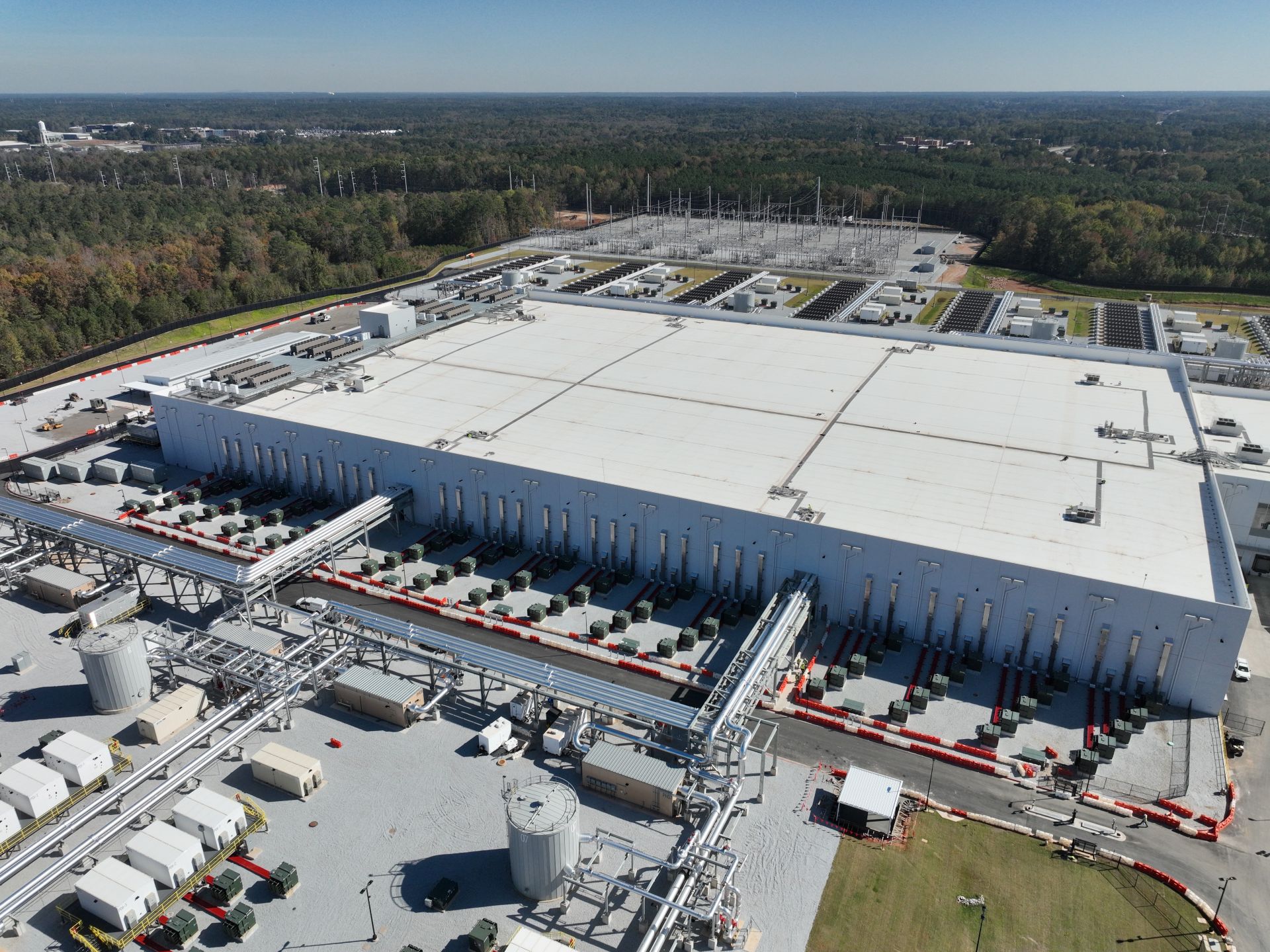
There’s a decent chance a data centre is planned near your postal code. The Globe and Mail’s new map, built with Vancouver research firm Aterio, counts 195 active data centre buildings in Canada, with 192 more announced and 18 under construction. Sixty-five are flagged as AI-capable.
The number of new buildings actually understates the scale. York University researchers found Canada’s planned capacity is nearly 10 times its current footprint, because the new sites are far bigger than the old ones. For AI compute specifically, the gap is wider still: a federal document puts current AI capacity at about 337 megawatts, against more than 20 gigawatts in planning or development.
With change on this scale, people are asking what these centres will mean for their communities, their power bills, and the environment. For investors and corporate development teams, there’s a second question: who controls the power, land, and grid access needed to build them. Here’s how the benefits and costs stack up.
The Good
The clearest benefit is revenue. Meta’s $13 billion Sturgeon County campus comes with about 3,000 construction jobs and 300 operating jobs, and Alberta estimates at least $250 million a year flowing to the province.
Developers are also increasingly paying for their own power. Meta’s campus pairs its grid connection with a new $4.6 billion generating station built beside it by private companies. Better designs give something back to the community too: TELUS says its Vancouver sites will route waste heat into local district energy systems.
Data sovereignty is the weakest benefit claim. Physical location is only part of it; ownership and jurisdiction matter at least as much. The Globe itself had to correct an overstatement on exactly this point.
The Bad
Water has been one of the main concerns, and the actual impact depends on the type of data centre being built.
- Closed-loop designs purportedly use very little water. Meta claims its closed-loop, dry-cooled system eliminates operational water usage, and it projects annual water use below that of a typical golf course. The catch is upstream: the gas plant powering the site will use water too, and its cooling design hasn’t been disclosed.
- Older evaporative designs use a lot of water. Microsoft’s Etobicoke site was approved to draw up to about 40 litres per second, roughly 1.2 billion litres a year.
The bigger risk is disclosure. Microsoft’s North Holland centre used about 84 million litres of water in 2021, against the 12 to 20 million it had promised.
Power bills are another real risk, but provinces are building in protections. Hydro-Québec, citing Bloomberg, says bills for all customers more than doubled over five years in U.S. jurisdictions with strong data centre growth. Canada’s response so far:
- Ontario plans a separate, higher rate for data centres above one megawatt.
- Quebec has proposed roughly 13 cents per kWh, against about six cents today.
- Alberta says homes outrank data centres in any grid emergency.
None of these protections have been tested at scale yet.
Jobs are thinner than the headlines suggest. Three hundred permanent roles on $13 billion works out to roughly $43 million of capital per job. Manitoba’s premier rejected one hyperscale proposal on similar grounds, calling it “a big threat to the environment and not much benefit to the economy”.
The Ugly
Gas. Alberta holds more than 90 per cent of planned data centre capacity. Natural gas supplies about 77 per cent of its grid, and developers who bring their own power must, for now, bring gas. The cleaner grids in Ontario, Quebec, and B.C. are rationing access, so the build-out is flowing toward one of the most fossil-heavy grids in the country.
Grid. Alberta has received requests for roughly 19,565 MW of data centre load. That’s more than its all-time record peak of about 12,800 MW. Meanwhile, Kevin O’Leary’s Wonder Valley now hopes to start construction in late 2028, and all three major gas turbine makers report delivery delays. Communities may spend years fighting projects that never get built.
Process. The approval regulations haven’t caught up with the proposed construction. Ontario data centres don’t require a full environmental assessment. Most municipalities also lack data-centre-specific zoning, which is why Oakville and Mississauga reached for one-year freezes.
What Separates a ‘Good’ Data Centre from a ‘Bad’ One
- Power: brings new clean generation, versus leaning on the existing grid or older technology
- Cooling: closed-loop or dry, versus evaporative on municipal water
- Cost: pays for its own connection, versus spreading costs across ratepayers
- Site: industrial land, versus farmland or dense neighbourhoods
- Heat: reused, versus vented
- Disclosure: published, verifiable water and power figures, versus promises
Why This Matters for M&A Professionals
When grid access is the bottleneck, the connection itself becomes the asset. One developer sold its share of Alberta’s interim allocation for $18 million: a queue position with no building attached. Expect deal flow, and corp dev hiring, to follow power: utilities, pipelines, telecoms, and the infrastructure players assembling land plus generation.
Sources: The Globe and Mail (Oct 2026); York University (Apr 2026); Canadian Press via HC Mag (2026); CTV/BNN Bloomberg (Jul 2026); Government of Alberta (Jul 2026); The Narwhal (Jul 2026); The Narwhal (Aug 2026); CBC (2026); Hydro-Québec (Feb 2026); CTV (Oct 2026); CTV/Canadian Press (Jun 2026); The Logic (Dec 2025); Kalina Power ASX filing (Nov 2025)
Reciprocity in Dealmaking

It’s hard to pinpoint the exact qualities that bring success in business development. There’s a significant overlap with sales - timeliness, innate curiosity, and mutual delivery of value all help. That last quality is particularly valuable in deal sourcing.
When you represent an investing firm, every founder wants to know what you think their business is worth. In many cases, the reason they take your call in the first place is because they want your opinion just as much as you want theirs. You don’t have to reveal your exact process or commit to a number, but by describing how you value businesses (what you look for, the red flags, the nice-to-haves) you help them understand how to present their business to you in the future. I’ve had situations where a founder asked me how I preferred their financials presented. Months later, that same accounting format helped my execution team build the model.
If you treat these calls as an opportunity to provide value, rather than just collecting data, you can build a real relationship. Often, it will be strong enough that when that founder does look to sell, you’ll be one of the first people they call.
This extends beyond deal calls. Every call you take with brokers, other intermediaries, and peers is an opportunity to mutually share knowledge that may help the other person. I don’t mean deal specifics or anything under NDA. I mean how you evaluate businesses, what you’re seeing in the market, and what makes a deal easy or hard to get done.
We tend to be reticent out of competitive instinct - we hold onto information for fear that divulging it would cause us to fall behind. But the opposite is often true. When we share information with others, we build trust, and in turn, they are more likely to reach out to us when they want an opinion, have a deal to send our way, or have an intro to make.
Reciprocity implies an even exchange, but every exchange starts with one side going first. Don’t wait for the other person to make the first move. Be the one who starts the chain.
Thank You
Thanks for the support — it means a lot. Consider sharing with your network, or providing feedback here: corpdevcareers.com/contact
— Liam