
TL;DR
- 5 new Corp Dev and M&A roles this week, including Amazon and Modaxo
- PE still offers the higher ceiling, but Corp Dev may offer the better risk-adjusted career
- Claude Fable 5 is powerful, expensive, restricted, and potentially awkward for confidential deal work
- Liam's Take: AI labs keep calling for restraint while racing ahead themselves
All content is written by me, with research pulled from online sources and AI. Sources are listed where possible. Some sections include photos and graphs generated to complement the articles.
This Week's Roles
This week's hand-picked roles across Corporate Development, Corporate Strategy, and Buyside M&A:
Sr. Manager, Corporate Development
Infinity Home Services
M&A analytics seat reporting to the SVP of Corp Dev at a PE-backed (LightBay + Freeman Spogli) home-services roll-up. Owns the financial modeling, capital allocation frameworks, and pipeline/market mapping behind an active serial acquirer across roofing and exteriors.
Corporate Development, Integration Manager
Amazon
Central Corp Dev role owning post-close integration across the full deal lifecycle, from diligence through the first 3–9 months after close. A cross-functional seat for someone who wants the integration side of M&A at real scale.
Corporate Development Manager
Modaxo
Execution-team M&A role reporting to the head of M&A for Modaxo Americas, the people-transportation division inside Constellation Software (TSE:CSU). Leads transactions end-to-end across diligence, structuring, negotiation, and integration, within a group that has acquired 1,000+ software businesses.
Director, Corporate Development & Ventures
MongoDB
Senior deal-lead seat owning M&A and strategic investments end-to-end, from origination through close, with a ventures mandate spanning the developer and AI ecosystem. Built for an operator with 8–12+ years who can run multiple live transactions in parallel.
Corporate Development & Capital Markets
Runway
Runway's first Corp Dev and Capital Markets hire, partnering directly with the CFO to own M&A, capital allocation, fundraising, and investor relations. A build-the-function generalist role at a frontier generative-AI company, for someone with 7+ years across banking, PE, VC, or corp dev.
Corp Dev or PE: The Trade-Off, Quantified
Last week, we made the case that private equity is no longer the default career path for bankers leaving the desk, though it remains the most common and traditional route. Naturally, that raises the numbers question: how does Corp Dev actually stack up against PE?
The Cash Gap is Real, But It's Mostly Carry
Let's start with the most obvious point, where the two are closer than their reputations suggest. A first-year PE associate at a mega fund earns $325–$425K, all-in. At a middle-market fund, it's closer to $250–$340K, sitting just above the $250–$325K range expected by a post-MBA Corp Dev manager at a mega-cap tech. The real "cash gap" is highly dependent on where you go.
The true gap opens as you spend more time in the role, and one of the main reasons for this widening is carried interest (carry). This is the share of a fund's investment profits that the deal team gets to keep, typically a set percentage of return above a minimum threshold. It's what makes PE so lucrative, and can meaningfully impact a PE professional's total comp - if their firm makes good investments.
A PE VP and Senior Manager or VP at a mega-cap tech can earn similar amounts in cash salary, but the PE VP may end up earning multiples of his salary in carry, again, if the firm does well as a whole.
But for PE professionals to realize meaningful carried interest, the fund first has to clear its hurdle: returning LP capital plus a preferred return, often around 8%. Until that happens, the upside that makes PE famous may remain theoretical. Many professionals may join the industry expecting career-defining carried interest payouts, only to spend years without any excess returns at all.
Across buyout vintages from 1986–2014, the median fund produced a gross IRR of roughly 10% before fees - only modestly clearing the typical hurdle rate of 8%. The dispersion is also huge. The spread between firms in the top and bottom quartile is about 12.9%. In a study of the bottom quartile, Cambridge Associates found that over half of investments registered at least some loss of investor capital. In other words, the carry outcome is far from guaranteed, even inside an asset class known for high headline compensation.
The honest version of the story isn't as simple as "PE pays more". The two paths can look surprisingly similar on cash compensation, but PE has a real edge in carried interest when fund performance cooperates.
What the Gap Actually Buys
Lifestyle is the first answer. Corp Dev runs roughly 50–60 hours a week against PE's 60–70. Over a career, it's thousands of hours spent with your family, not at the office.
The second is the shape of the upside. Carried interest is a deferred bet on the whole team's performance. It vests over four to six years, and if the fund underperforms it can pay a fraction of the expected value, or nothing at all. Corp Dev equity is the opposite profile: more liquid, lower ceiling, and usually far less variance. 68% of Corp Dev offers in 2025 included equity or long-term incentives, according to Charles Aris.
One path offers a bigger number with a level of uncertainty. The other offers a smaller number, but one you can actually bank.
What Happens Next
Realistically, most standard Corp Dev careers plateau at VP. A typical F500 Corp Dev function has three to five people at the SVP or Director level, and exactly one Head. The seats above VP are scarce.
But Corp Dev isn't as single-track as PE is. PE is a 15–20 year tournament to partner with attrition at every level, and few exits that pick up naturally from where you left. Corp Dev stalls (or evolves) more gently, providing paths into business unit strategy, corporate finance, or even operating roles at the companies you helped buy. These are very real options for professionals who want a change after ten years of running investments.
Why This Matters for M&A Professionals
The choice between Corp Dev and PE is about more than just cash compensation, and even on paper they are closer than the reputation suggests given the variance involved in carried interest. The real decision is about where you want to spend your time, and how you want your deal experience to evolve.
PE offers a higher ceiling and a narrower career path. That means more hours, more variance, and more upside if the firm performs and you're able to make it to the top.
Corp Dev offers durability, a life outside of live deals, and optionality for career advancement within a larger ecosystem, plus more earnings stability over the long run.
This makes Corp Dev an excellent move for some, and the wrong move for others. The dividing line isn't talent - both require outstanding people. It's expectation: how much variance you want, how much time you're willing to trade, and what kind of career you want your deal experience to become.
Sources: Prospect Rock Partners (Feb 2026); The Private Equiteer (Feb 2026); Goodwin (2023); Cambridge Associates (2025); RVK via Nasdaq eVestment; Charles Aris (Feb 2026); Mergers & Inquisitions (Mar 2026).
Tool of the Week - Claude Fable 5

On June 9, Anthropic released Claude Fable 5 to the general public. Just before that, the company issued a call for a globally coordinated pause in frontier AI development (more on that below in Liam's Take). In this article we will discuss the new model, its upgrades from Opus 4.8, drawbacks, and differences from the original Mythos.
Fable 5 is the publicly available, safeguarded version of the model Anthropic originally touted, called Mythos. Mythos has long been claimed to be "too advanced", and "too dangerous" to release to the general public, and is currently locked to vetted cybersecurity and biology partners. These two work on the exact same underlying models, but differ in their access control and safety features.
For corp dev, the demos worth reading about are the knowledge-work results. Anthropic reports Fable 5 posts the highest score of any model on Hebbia's senior-level finance benchmark, with gains in chart/table interpretation and document reading over Opus. A legal-AI tester reported that in a blind review, the team's lawyers found Fable's contract redlines matched or beat their current model in every situation. Trading firm IMC stated that it aced their analysis evaluations practically across the board.
A few drawbacks to note. First, using Fable 5 burns through tokens at twice the rate of Opus 4.8. If you already find you're hitting utilization caps, Fable is going to drastically reduce the number of prompts you're able to input in a given session.
Second, in order to reduce the perceived risk of releasing the original, unguarded Mythos to the public, there's a set of classifiers embedded within Fable in order to reroute "high-risk" requests. Whenever the model perceives a request to be higher risk, it will default to using Opus 4.8 instead. Anthropic admits that these classifiers are tuned conservatively, and will inevitably end up catching some harmless queries. In total, it is estimated that somewhere under 5% of sessions will trigger this response.
In addition, Anthropic now requires 30-day data retention on all traffic using this new model. This is especially important to note for teams using AI with confidential transaction data.
One last catch: it's included in a paid Claude plan only through June 22. After that, we can expect to have to pay extra - either pay as you go or another subscription charge.
Sources: Anthropic (June 2026); TechCrunch (June 2026); CNBC (June 2026).
Are AI Labs Playing by Their Own Rules?
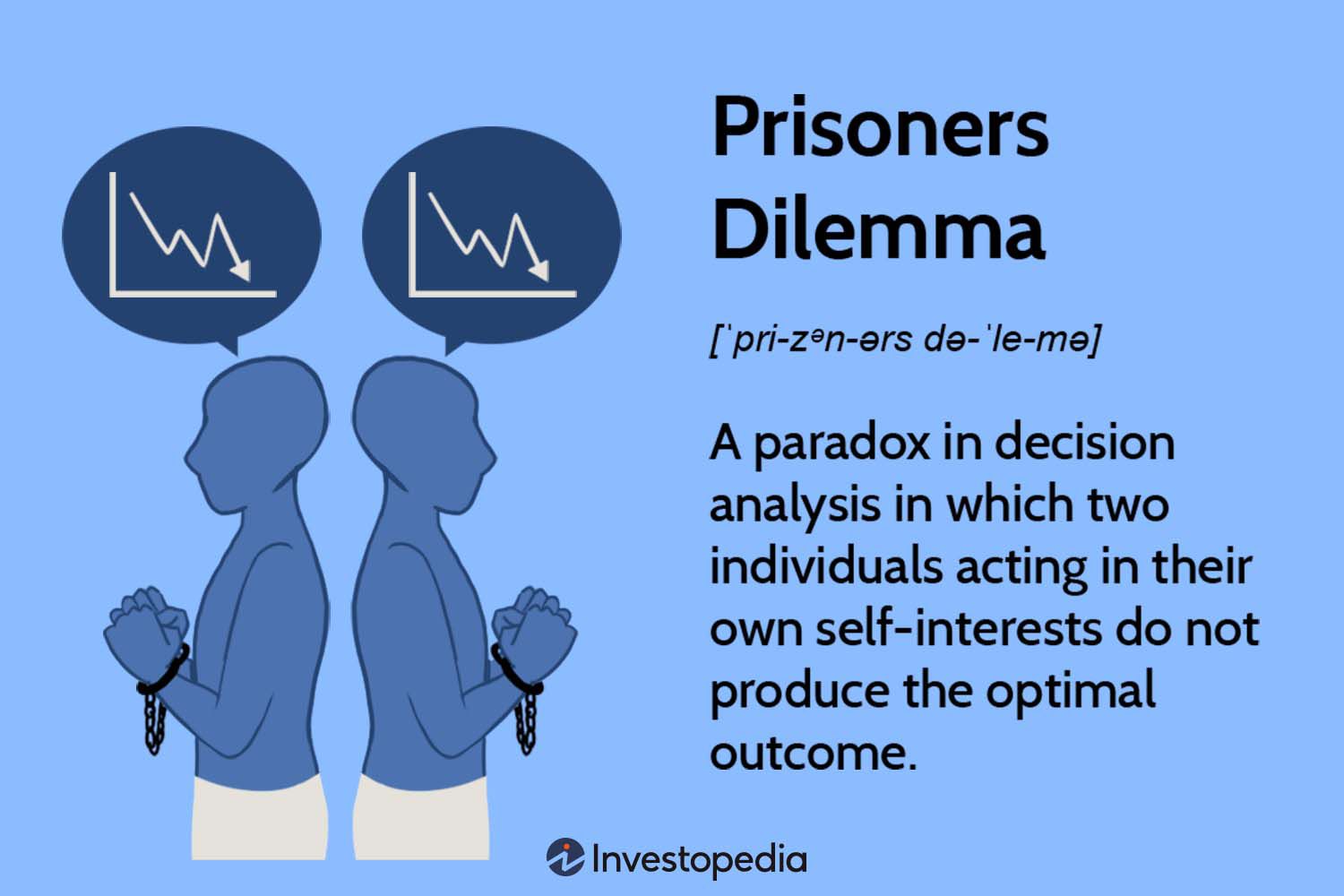
Just days before the release of Fable 5, Anthropic Institute, the AI lab's research arm, released a warning that frontier AI models are advancing towards "recursive self-improvement" - the point where AI can autonomously design and upgrade itself without human oversight - and called for a conditional globally coordinated slowdown of model development if risks rise.
There's an obvious contradiction here: One day they're asking everyone to join them in putting down their shovels, the next they're releasing their newest frontier model. It's not hard to understand why this is happening - AI is like a Pandora's box - once opened it's almost impossible to contain, and why would you contain it, when your rivals will continue to profit in your stead?
It's not the first time an industry player has called for a hiatus on development. Back in 2023, Elon Musk signed a letter demanding a pause on anything more powerful than GPT-4, having incorporated xAI that same month, and later admitting he signed it "knowing it was futile". In February, he called Anthropic a company that "hates Western civilization", but by May he was profiting massively off leasing them his Colossus supercomputer. When your perceived rivals are heading towards the same intended outcomes, you're more likely to speed up than to slow down.
The "rival" in question is almost invariably China. Imposing, silent, and ever creeping forward, the mere mention of Chinese innovation is enough to end any debate on a coordinated moratorium. After all, we can't possibly pause development if China is continuing towards their political and social goals. Somehow, by achieving ours first, we will stop them from imposing their ideology on the West. The danger is that the China argument becomes a blank cheque: more compute, more subsidies, fewer constraints, and less scrutiny, all justified by the claim that restraint is equivalent to surrender.
We see this argument play out consistently. In May, Kevin O'Leary used it on Tucker Carlson's show, defending his $100 billion, 40,000-acre Utah data center against questions on taxpayer subsidies and power. His answer was to ask whether American developers should "put down our shovels and stop while the Chinese accelerate theirs".
The rule these players propose is always for everyone else, never for them personally. China is the perfect justification - a silent competitor who's never in the room to argue back, foreign enough to remain mysterious, and in the Western mind, poised to dominate any ground we yield.
Sources: Anthropic (June 2026); TechCrunch (June 2026); Future of Life Institute (March 2023); Reuters (March 2023); Elon Musk via X (Nov 2023, Feb 2026); Fortune (May 2026); The Tucker Carlson Show (May 2026).
Thank You
Thanks for the support — it means a lot. Consider sharing with your network, or providing feedback here: corpdevcareers.com/contact
I post every Thursday. Subscribe to get the next issue delivered to your inbox.
— Liam